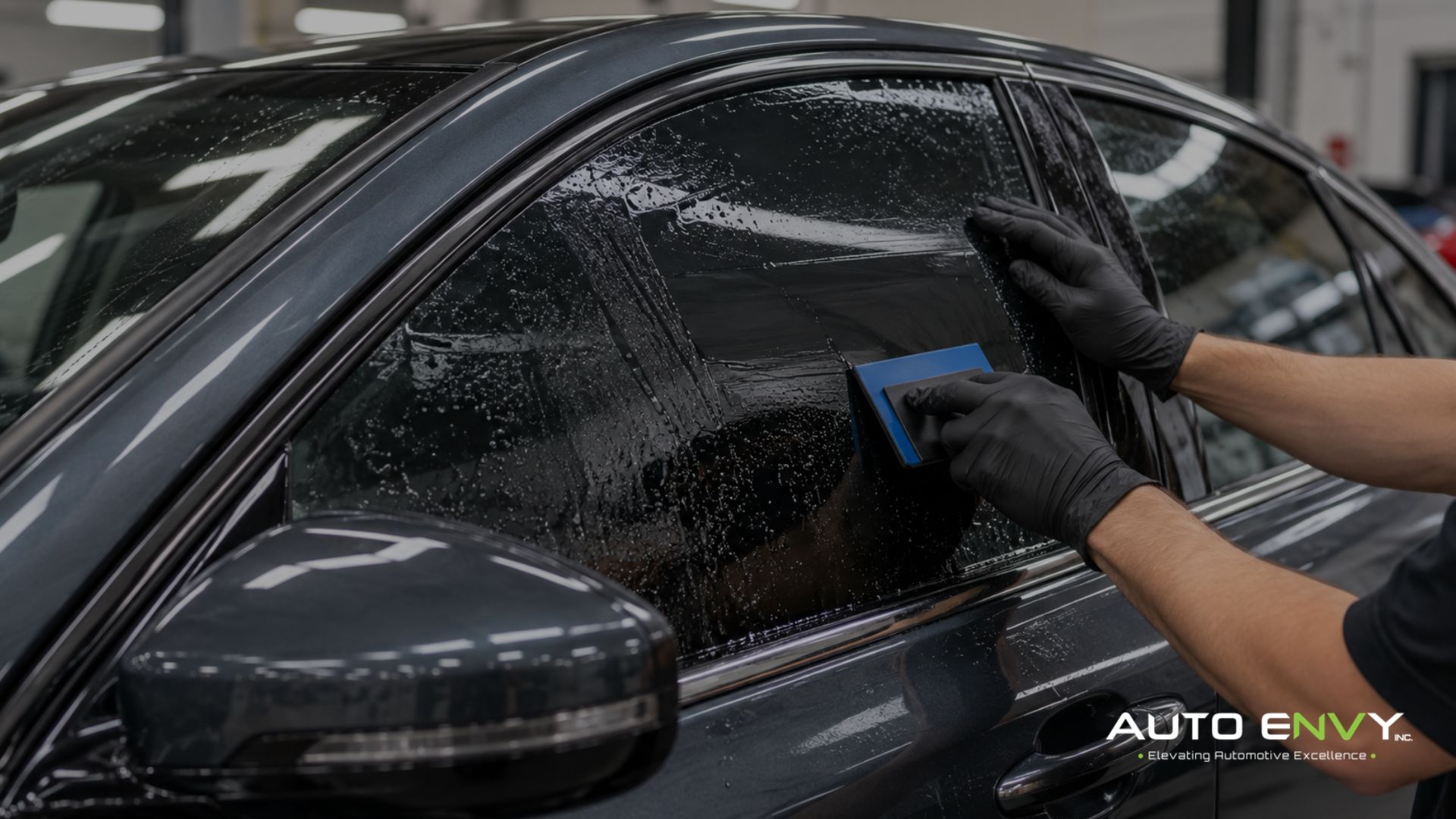
Ceramic window tint is an automotive window film engineered with ceramic or nano-ceramic technology to reduce solar heat, infrared energy, UV exposure, and glare without relying on an extremely dark shade. Unlike basic films chosen primarily for appearance and privacy, ceramic tint is built around performance.
That distinction matters in Fresno. A vehicle can spend hours absorbing Central Valley sun even when it is simply parked outside at work, running errands along Shaw Avenue, or moving through afternoon traffic. With the right
ceramic window tint, controlling the energy coming through the glass does not have to mean making every window as dark as possible.
How Does Ceramic Window Tint Work?
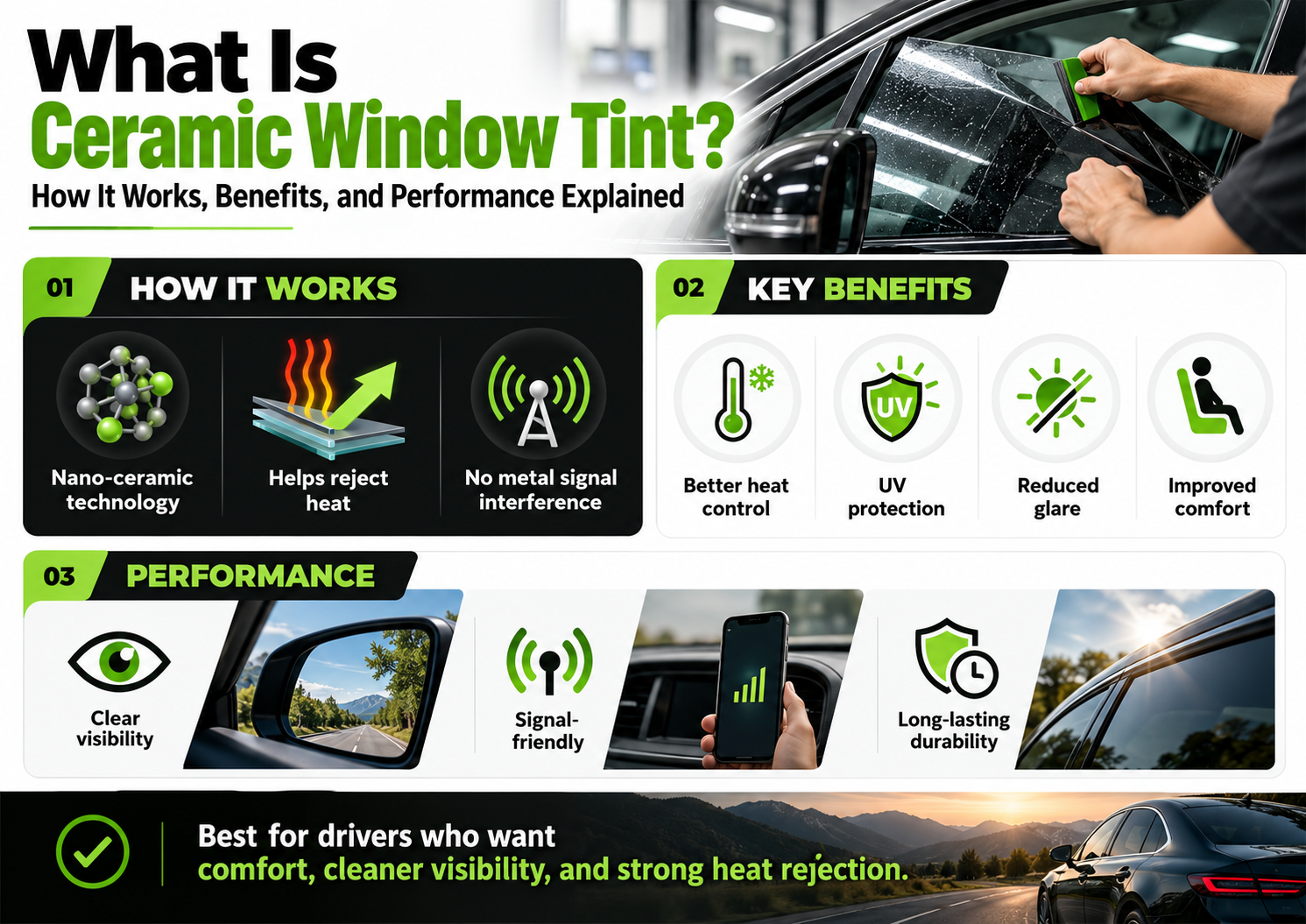
Ceramic window tint works by using microscopic ceramic particles within the film to manage solar energy passing through automotive glass. Those particles allow the film to reject a significant portion of infrared heat and UV radiation while maintaining relatively clear outward visibility.
Standard automotive glass already provides some protection, but large areas of glass still allow solar energy to enter the cabin. Once that energy reaches seats, dashboards, trim, and other interior surfaces, those materials heat up and contribute to the temperature you feel inside the vehicle.
Ceramic technology addresses that process at the glass.
It is also nonmetallic, which is an important distinction from traditional metallized tint technologies. Quality ceramic films are designed to deliver their thermal performance without creating the signal-interference concerns commonly associated with older metallic constructions.
When we discuss ceramic film with customers at
Auto Envy Fresno, we focus on this functional difference first. The shade determines a large part of how the vehicle looks, while the film technology determines much more of how it performs.
Is Ceramic Window Tint Better Than Regular Window Tint?
Ceramic window tint generally offers stronger heat-management performance than basic dyed window tint, but whether it is the better choice depends on what the driver expects from the installation. Someone mainly interested in changing the appearance of the glass may have different priorities from someone trying to reduce the heat felt during Fresno summers.
Dyed films primarily use color within the film to reduce visible light and glare. They can provide privacy and UV protection at a more accessible price point, but their thermal performance is typically more limited than higher-end ceramic products.
Ceramic films are designed differently. Their value comes from combining several characteristics:
- Stronger infrared and solar heat rejection
- High UV protection
- Good optical clarity
- Reduced daytime glare
- Nonmetallic construction
- Heat performance without requiring maximum darkness
This is why comparing two pieces of tint based only on how dark they look can be misleading. Similar-looking films may perform very differently once Fresno sun begins hitting the glass.
Does Ceramic Tint Have to Be Dark to Block Heat?
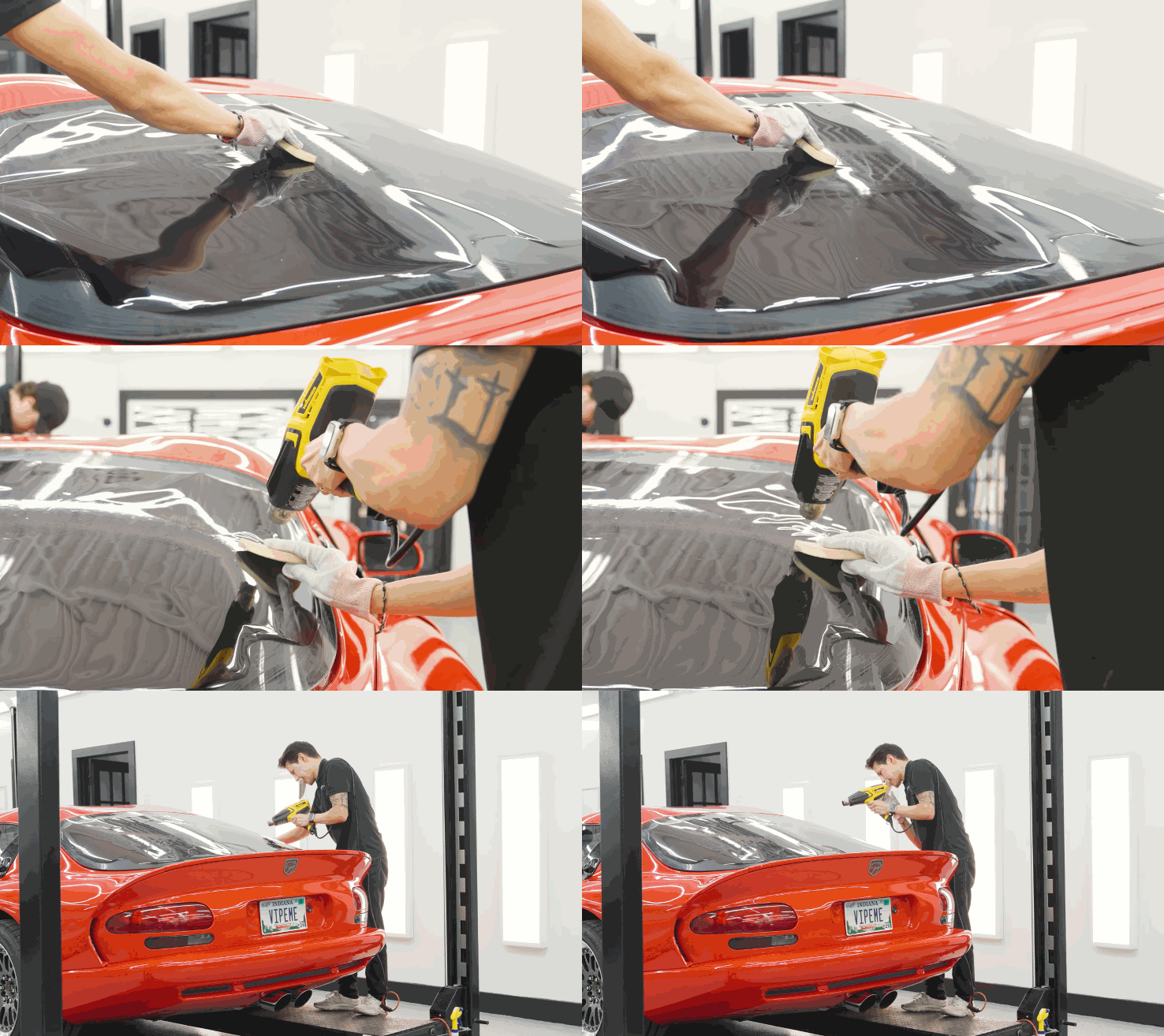
Ceramic tint does not have to be extremely dark to provide substantial heat rejection because visible light and infrared energy are different parts of solar radiation. A relatively light ceramic film can therefore offer meaningful thermal performance even when it does not dramatically change the appearance of the window.
This is one of the most useful things to understand before choosing window tint.
VLT, or visible light transmission, measures how much visible light passes through the glass. A darker film generally has a lower VLT. That number does not directly tell you how effectively the film manages infrared heat.
For Fresno drivers, separating those two factors creates more flexibility. Someone who values clear outward visibility can choose a different shade from someone prioritizing rear-seat privacy while still benefiting from ceramic technology.
In our work at
Auto Envy Fresno, we prefer to treat shade and performance as two connected but separate decisions. First, consider what you want the film to accomplish. Then choose a darkness level that fits the vehicle, visibility preferences, appearance, and California requirements.
What Does Infrared Rejection Mean in Ceramic Window Tint?
Infrared rejection describes how effectively a window film reduces infrared energy passing through the glass, but it should not be treated as the only measurement of ceramic tint performance. It is an important specification because infrared energy contributes to the heat occupants can feel from sunlight.
Higher-performance ceramic films can reject a substantial portion of this energy. However, shoppers should be careful when comparing one manufacturer's infrared percentage directly with another because testing ranges and measurement methods can differ.
Total solar energy rejection, or TSER, provides another useful measure because it considers a broader portion of the solar energy interacting with the glass and film system.
The practical takeaway is simple: do not choose
ceramic window tint because one number looks impressive on a specification sheet. Infrared rejection, total solar performance, visible light transmission, clarity, film construction, and installation quality should be considered together.
What Are the Main Benefits of Ceramic Window Tint?
The main benefits of ceramic window tint are improved heat control, UV protection, glare reduction, privacy options, and greater cabin comfort without relying solely on dark glass. Those benefits become particularly noticeable for vehicles exposed to Fresno's long periods of warm, sunny weather.
Heat rejection can make the sunlight coming through side glass feel less intense during daytime driving. UV protection can reduce exposure through the windows and help protect interior materials from one contributor to long-term fading and deterioration.
Glare reduction can also make bright daytime conditions more comfortable, while different available shades allow drivers to adjust privacy and appearance separately from thermal performance.
Ceramic tint does not eliminate cabin heat, and a parked vehicle will still become hot in Fresno summer conditions. Its purpose is to reduce the amount of solar energy entering through the treated glass and make that exposure easier to manage.
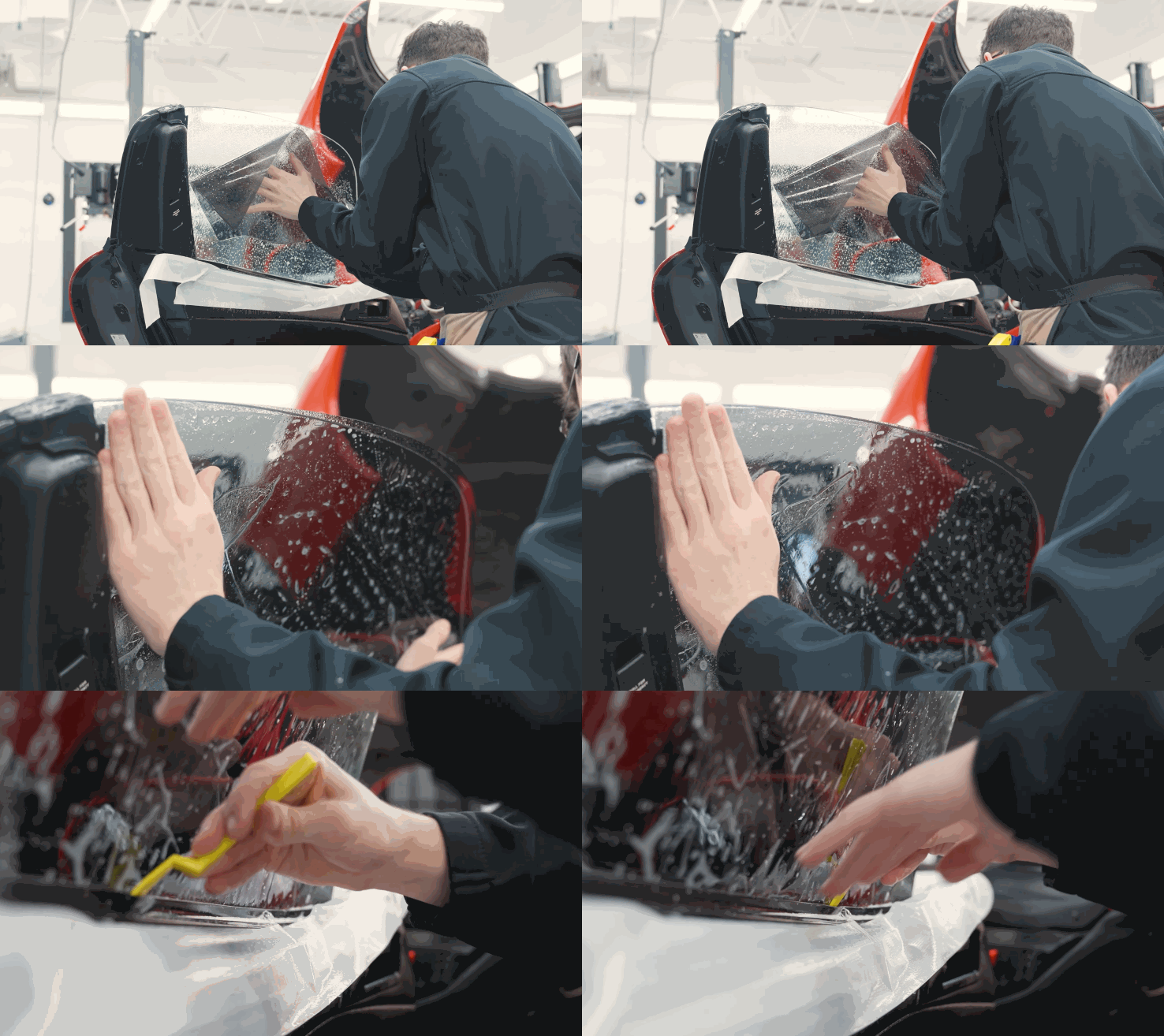
Does Ceramic Window Tint Keep a Car Cooler?
Ceramic window tint can reduce the amount of solar energy entering through the glass, which can make the cabin more comfortable during sunny conditions. It does not function like air conditioning, and it will not keep a parked vehicle cool indefinitely.
The difference is more noticeable while driving. When sunlight hits untreated side glass, occupants can often feel radiant heat directly on their skin even when the air conditioner is running. A high-performance ceramic film reduces part of that incoming energy.
That can be particularly useful during Fresno afternoons when the sun remains strong for long stretches of the commute.
Ceramic tint can also help the climate-control system work against a lower solar load. That does not mean the air conditioner suddenly needs little energy, but reducing incoming heat can make maintaining a comfortable cabin easier once the vehicle has cooled down.
At
Auto Envy Fresno, we set that expectation clearly. Ceramic tint improves heat management. It does not turn automotive glass into complete thermal insulation.
Does Ceramic Window Tint Affect Night Visibility?
Ceramic technology itself does not inherently reduce nighttime visibility more than other film types; the shade you choose has a much greater influence on how much visible light reaches your eyes.
This distinction matters because ceramic film is available in different VLT levels. A lighter ceramic shade can maintain relatively strong outward visibility while still providing the heat-control characteristics associated with the film technology.
A very dark shade, ceramic or otherwise, allows less visible light through the glass. That can make details harder to see in poorly illuminated areas at night.
Drivers who frequently travel after dark should therefore choose shade carefully rather than assuming darker is automatically better.
For everyday Fresno driving, the strongest setup often balances daytime glare control and privacy with comfortable nighttime visibility. Film performance and shade selection should work together instead of being treated as the same decision.
Choosing Ceramic Window Tint in Fresno
The right ceramic window tint combines appropriate heat performance, optical clarity, shade, and professional installation for the way you actually use your vehicle. There is no single shade or performance level that works best for every driver.
Think about where the vehicle spends most of its time, how often you drive during daylight hours, how much nighttime visibility matters to you, and whether privacy or appearance is also a priority.
For Fresno drivers, those considerations can be more useful than simply choosing the darkest film or the product with the largest number on its specification sheet.
If you want to understand how different ceramic films would perform on your particular vehicle, contact us at Auto Envy Fresno. We can walk you through the available window tint options, compare performance and shade choices, and help you select a setup that fits how you drive through Fresno.