The main types of car window tint include dyed, metallic, hybrid, carbon, and ceramic films, each with different strengths in heat rejection, appearance, signal compatibility, durability, and price. The best choice depends on what matters most to you, whether that is privacy, glare reduction, cabin comfort, long-term color stability, or stronger performance in Fresno heat.
Not every dark film performs the same way. Two windows can look nearly identical from the outside while behaving very differently once the Central Valley sun starts heating the cabin.
What Are the Main Types of Car Window Tint?
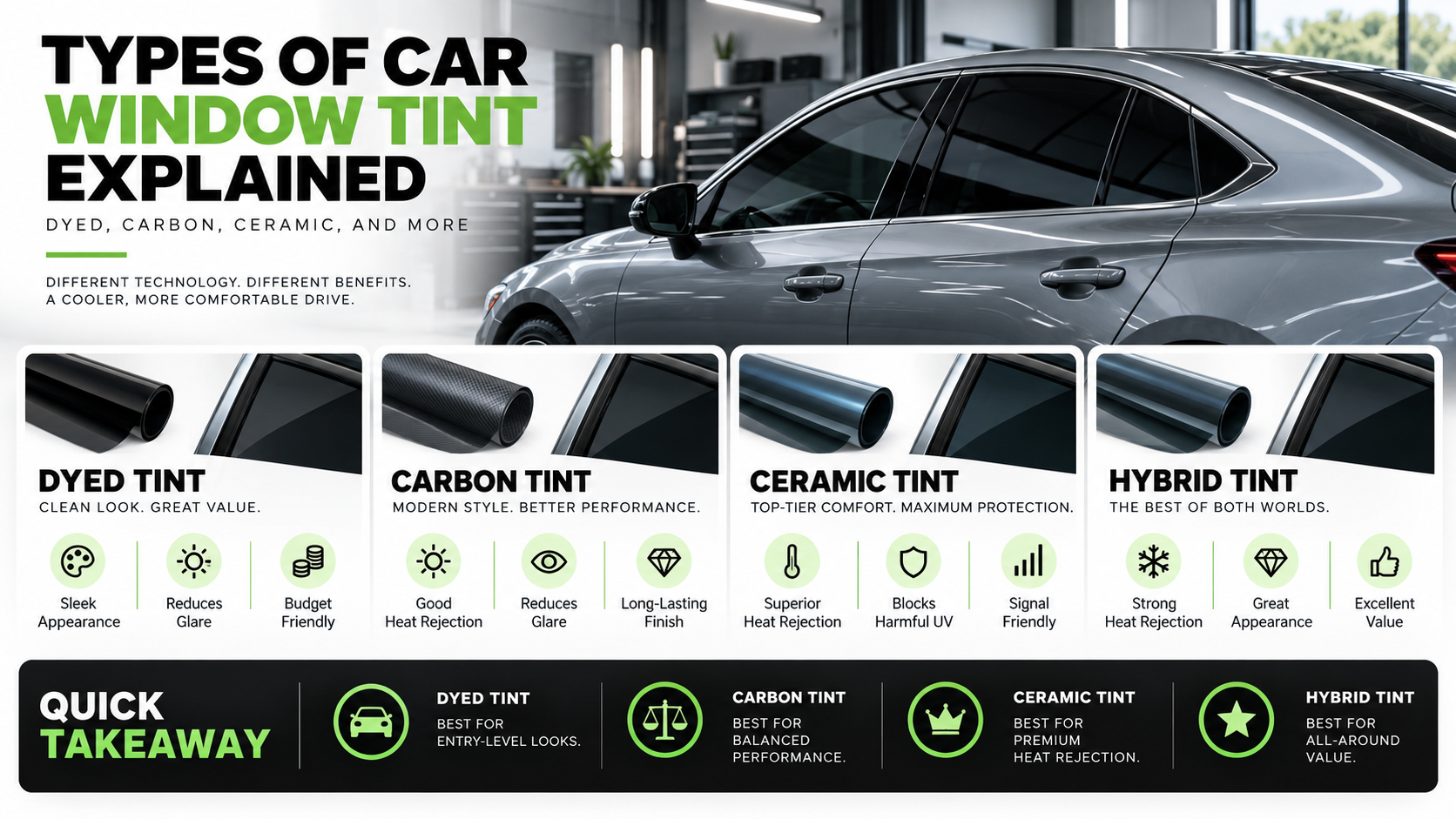
Automotive window tint can be divided into several major categories based on the materials and technology used inside the film. Dyed, metallic, hybrid, carbon, and ceramic tint all reduce visible light to some degree, but their construction determines how they handle heat, glare, UV exposure, and long-term use.
The main categories include:
- Dyed window tint: Uses dyed layers primarily for shade, privacy, and glare reduction.
- Metallic window tint: Incorporates metal particles to reflect some solar energy.
- Hybrid window tint: Combines dyed and metallic components to balance cost and performance.
- Carbon window tint: Uses carbon-based material for stronger heat control and color stability.
- Ceramic window tint: Uses advanced ceramic particles for high heat rejection and optical clarity.
At
Auto Envy Fresno, we focus first on what the driver wants the film to accomplish. Someone looking mainly for a darker appearance may not need the same technology as someone who parks outside all day and wants stronger heat rejection.
How Does Dyed Window Tint Work?
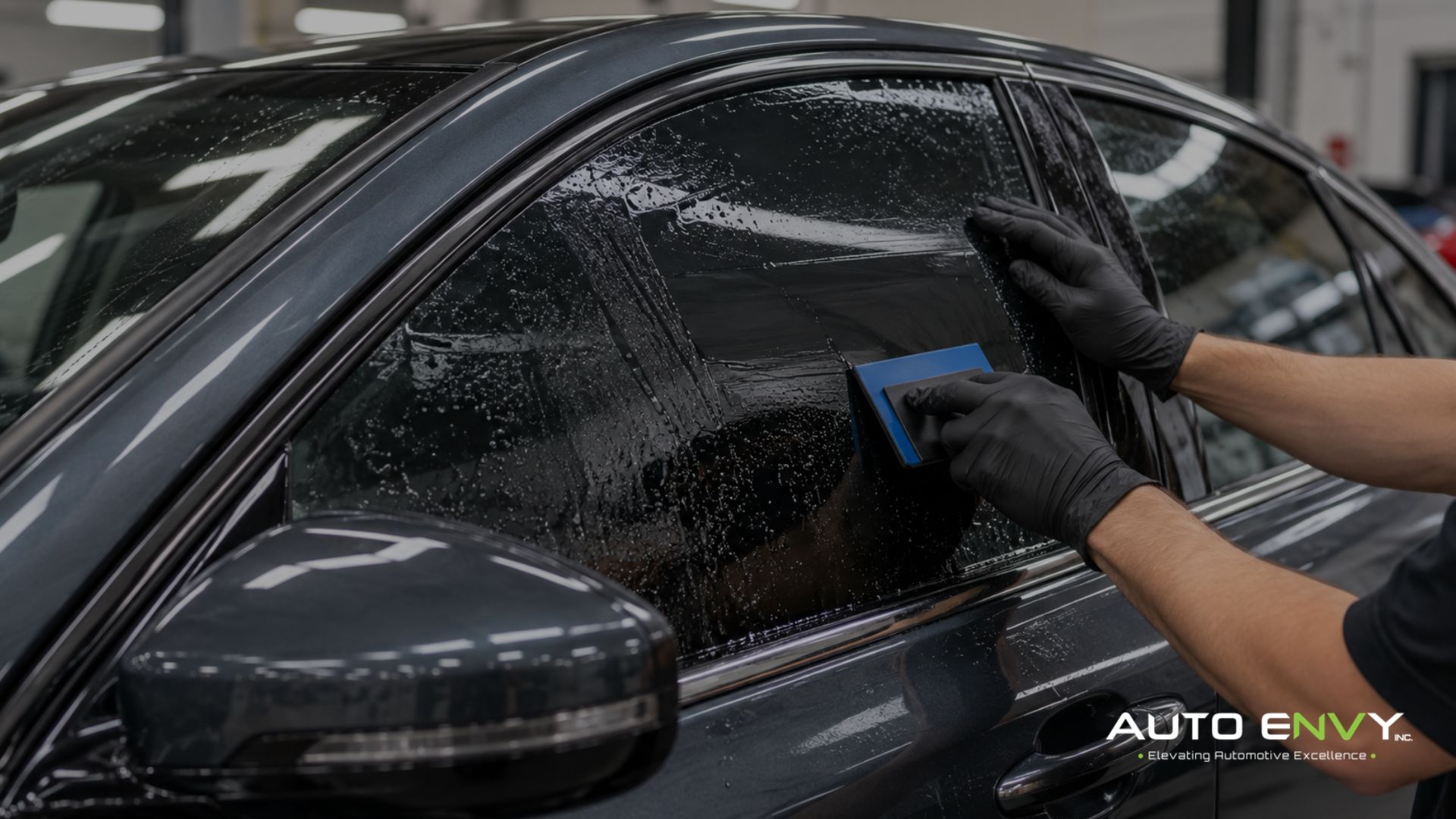
Dyed window tint uses layers of dye to absorb visible light and create a darker appearance, making it one of the simplest and most affordable types of automotive film. It is commonly chosen for privacy, glare reduction, and aesthetics.
Dyed film can also provide UV protection, but its heat-control performance is generally more limited than higher-end carbon or ceramic options.
One of its advantages is appearance. Quality dyed films can provide a clean, non-reflective look that many drivers prefer.
The tradeoff is long-term performance. Lower-quality dyed films may be more vulnerable to fading or color changes after extended sun exposure, particularly when a vehicle spends significant time outdoors.
For Fresno drivers, that means dyed
window tint can still make sense when appearance and budget are the main priorities, but it may not be the strongest option for someone specifically trying to reduce intense summer heat.
What Is Metallic Window Tint?
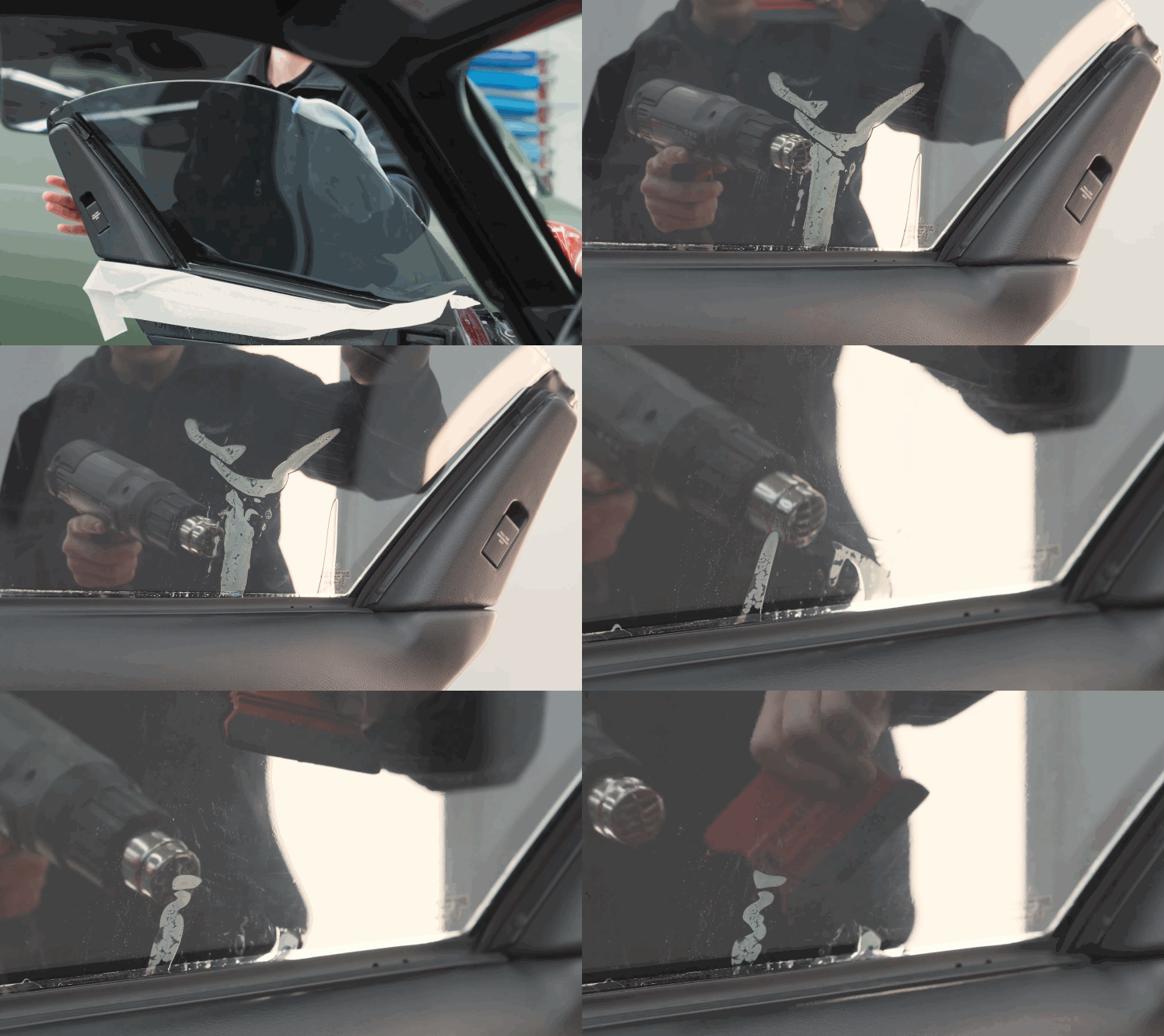
Metallic window tint uses tiny metallic particles to reflect part of the incoming solar energy, which can improve heat rejection compared with basic dyed film. It can also provide strong glare reduction and good durability.
The reflective quality can make metallic tint visually different from dyed or ceramic products. Some drivers like that appearance, while others prefer a more neutral or factory-like look.
Another consideration is electronic compatibility. Because metallic films contain conductive material, certain products may interfere with radio, GPS, cellular, or other wireless signals.
That potential tradeoff matters more today because modern vehicles rely heavily on connected electronics.
At
Auto Envy Fresno, we consider both heat performance and how the film interacts with the vehicle. A film can perform well thermally but still be the wrong choice when electronic compatibility or a low-reflective appearance is a higher priority.
What Is Hybrid Window Tint?
Hybrid window tint combines dyed and metallic components to provide a middle ground between basic appearance-focused film and higher-performance options. It is designed to deliver better heat management than a simple dyed film while avoiding some of the stronger reflective characteristics associated with heavily metallized tint.
Hybrid film can be a practical choice for drivers who want a balance of price, privacy, glare reduction, and improved solar performance.
Because different manufacturers use different constructions, not every hybrid product performs the same way. The amount of metal, dye formulation, adhesive quality, and overall film design all affect the final result.
For Fresno drivers, hybrid tint can work well when moderate heat rejection is important but stepping into a premium ceramic film is not necessary.
What Makes Carbon Window Tint Different?
Carbon window tint uses carbon-based material to improve heat rejection, durability, and color stability without relying on metallic particles. It is often positioned between hybrid and ceramic films in terms of both performance and price.
One of the biggest advantages is that carbon film does not depend on metal to manage heat, so signal interference is generally not the same concern.
Carbon tint also tends to maintain a dark, neutral appearance over time better than low-grade dyed film. That makes it appealing to drivers who want a darker look without the reflective finish associated with some metallic products.
For Fresno conditions, carbon
car window tint can offer a meaningful step up in comfort while remaining below the cost of premium ceramic technology.
What Is Ceramic Window Tint?
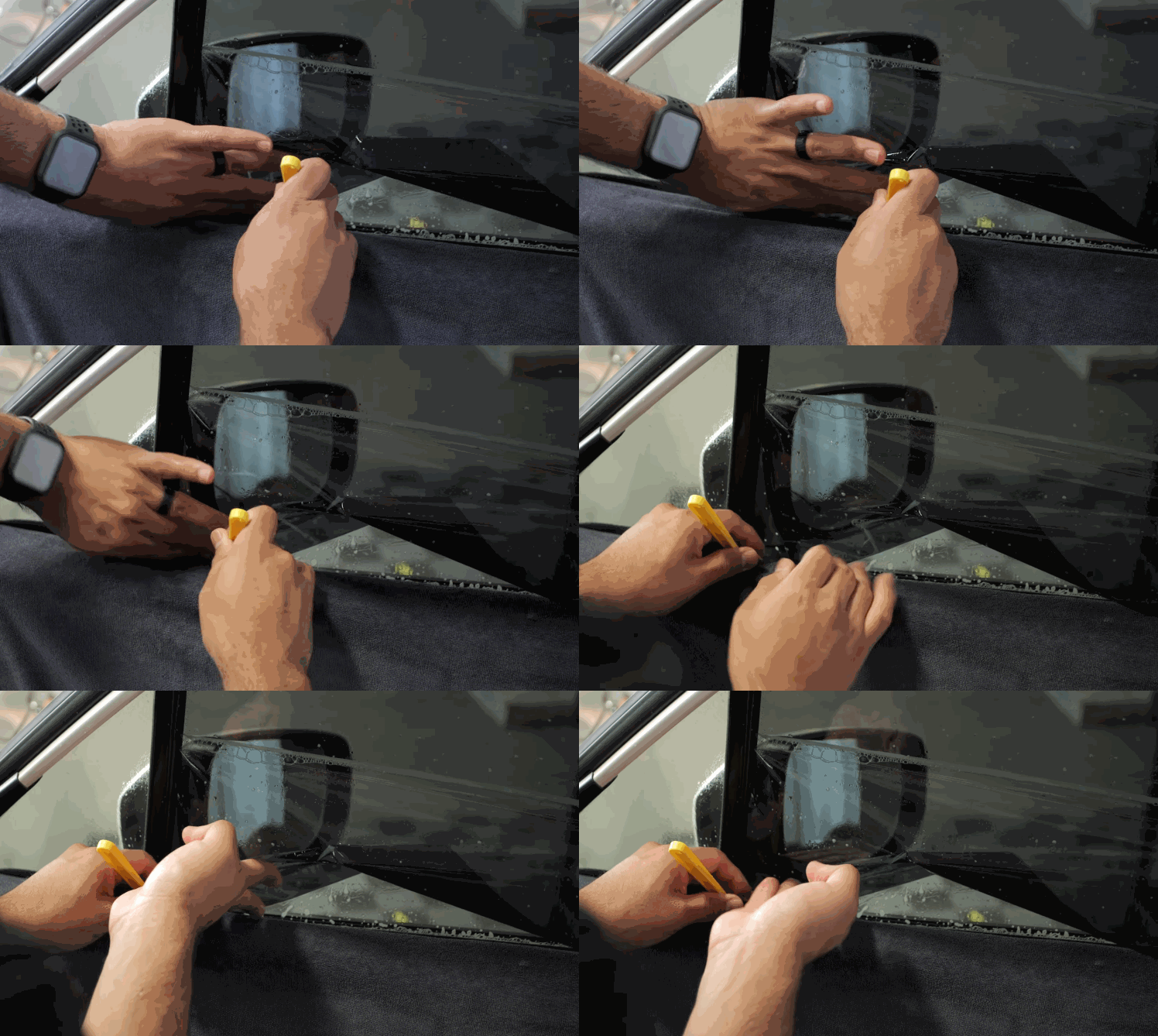
Ceramic window tint uses advanced ceramic or nano-ceramic particles to provide strong heat rejection, UV protection, and optical clarity without relying on metallic components. It is generally considered one of the highest-performance options available for automotive glass.
Its biggest advantage is that thermal performance does not depend entirely on making the windows extremely dark. A lighter ceramic film can still provide substantial solar and infrared heat control, which gives drivers more flexibility when choosing a shade.
Ceramic construction also avoids the electronic signal concerns associated with some metallic films. For newer vehicles with GPS, smartphones, wireless connectivity, and other electronics, that can be an important consideration.
In Fresno, ceramic tint becomes especially relevant for vehicles that spend long periods outdoors or are driven regularly during the hottest part of the day. At
Auto Envy Fresno, we often discuss ceramic film with customers whose main concern is cabin comfort rather than simply changing the exterior appearance of the glass.
Does Darker Window Tint Always Perform Better?
Darker window tint does not automatically provide better heat rejection because darkness and thermal performance measure different characteristics. Film construction often matters more than shade when heat control is the priority.
Visible light transmission, or VLT, describes how much visible light passes through the glass. Lower VLT usually means a darker appearance.
Heat performance is evaluated differently. Infrared rejection and total solar energy rejection provide more information about how effectively a film manages incoming solar energy.
This is why a lighter ceramic film can outperform a much darker dyed film in Fresno heat.
Shade still matters for privacy, glare control, appearance, and nighttime visibility, but it should not be used as the only way to judge film quality.
Which Type of Window Tint Should You Choose?
The right window tint depends on what you want from the vehicle rather than which film category sounds the most advanced. Dyed tint works well for straightforward appearance and privacy, hybrid film adds balanced performance, carbon improves heat control and color stability, and ceramic offers the strongest combination of thermal performance and clarity.
For Fresno drivers, heat exposure deserves particular consideration, but it should be balanced with budget, visibility, vehicle use, and appearance.
At
Auto Envy Fresno, we can help you compare the differences in person rather than choosing from specifications alone.
Contact us to discuss the type of window tint that fits your vehicle, driving routine, and expectations for Fresno conditions.