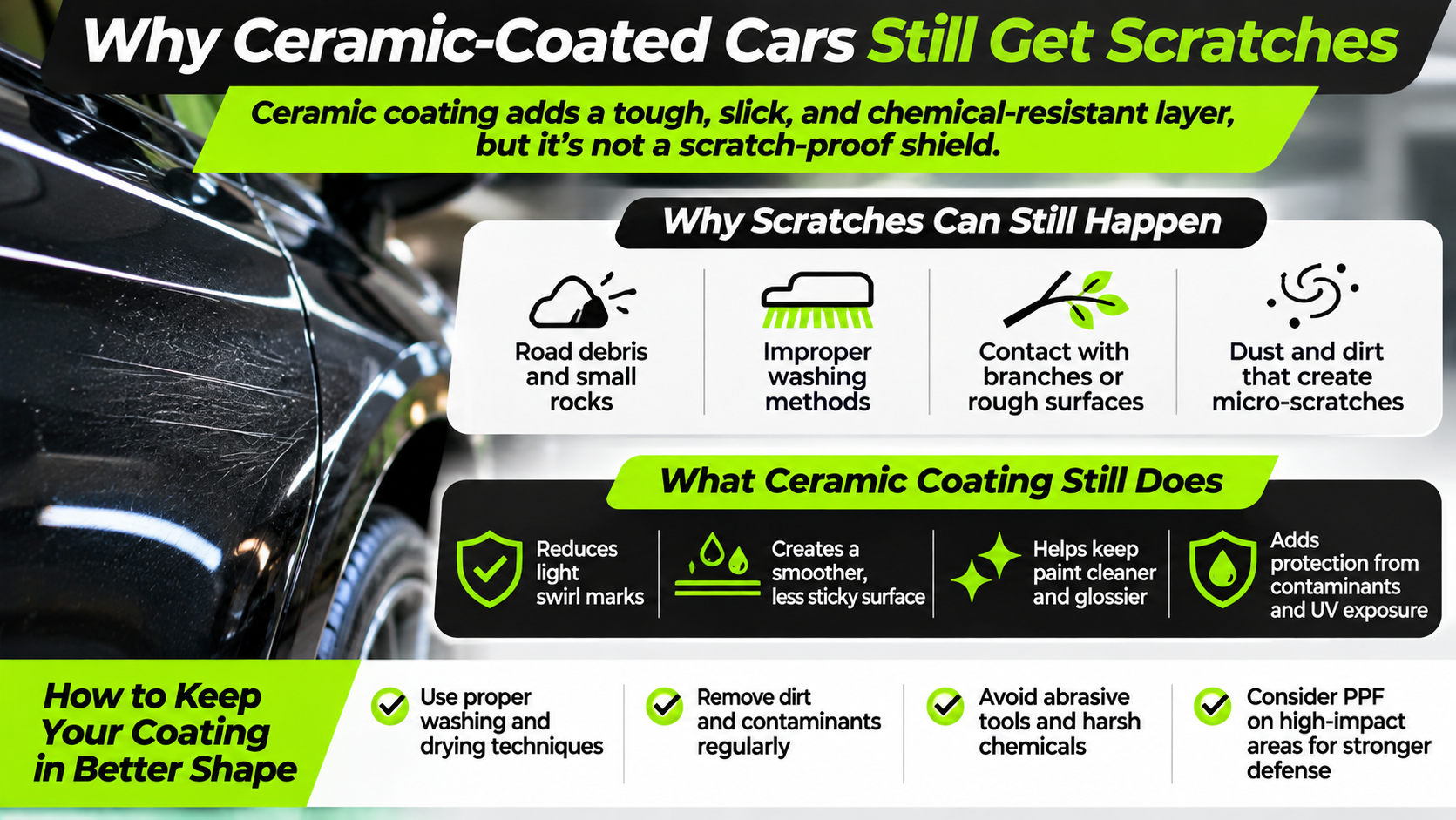
A ceramic-coated car can still get scratches because ceramic protection is designed primarily to improve surface resistance, gloss, hydrophobic behavior, and ease of maintenance, not to create an impact-proof shell over the paint. The coating can help reduce some light marring and make safer washing easier, but deeper scratches, rock chips, and physical contact can still reach the clear coat.
For Fresno drivers, that does not make ceramic coating less useful. It simply means getting the best results depends on understanding what the coating does well and maintaining the vehicle in a way that limits avoidable damage.
Why Can a Coated Car Still Get Scratched?
Most scratches come from physical contact that exceeds what a thin ceramic layer is designed to resist. A coating bonds tightly to the paint, but it does not have the thickness of paint protection film or another impact-absorbing material.
Common sources of scratches include dirty wash mitts, automatic car-wash brushes, tree branches, clothing or bags rubbing against the body, and debris dragged across dusty paint.
This is where expectations matter. At Auto Envy Fresno, we look at ceramic protection as a way to improve how the surface behaves and reduce the effort required to keep it clean. That can lower the chances of wash-induced damage, but it cannot prevent every mark caused by direct contact.
The good news is that many scratches are avoidable once the maintenance routine matches the coated surface.
Does Ceramic Coating Help Prevent Swirl Marks?
A properly maintained coated surface can be less prone to light wash-induced marring because dirt and grime generally release more easily during cleaning. The coating helps by reducing how much friction is needed, not by making the paint impossible to swirl.
That difference can have a real benefit over time.
When a Fresno vehicle accumulates dust, pollen, or road film, the safest approach is to remove those particles with plenty of lubrication rather than rubbing them across the paint. A slick ceramic surface makes that process easier.
A Good Routine for Preserving Gloss
Ceramic coating can help contaminants release more easily, while gentle washing and clean microfiber materials reduce unnecessary contact.
Build Your Washing Scenario
Change the paint protection and washing technique to see how everyday maintenance affects the risk of visible swirl marks.
What Actually Helps Prevent Swirl Marks?
Ceramic coating can make maintenance easier, but washing technique remains essential. Clean microfiber towels, proper wash media, and gentle drying methods help limit unnecessary friction against the paint.
At Auto Envy Fresno, we still recommend paint-safe wash methods even after coating. Clean microfiber towels, proper wash media, and gentle drying techniques do more to preserve the finish than assuming the coating will absorb poor washing habits indefinitely.
Why Are Automatic Car Washes Still a Risk?
Brush-style automatic car washes can still create scratches on coated vehicles because the coating cannot stop contaminated brushes or aggressive contact from dragging particles across the paint.
Those brushes may have touched dozens of dirty vehicles before reaching yours. Sand, dust, and grit trapped in the material can act like fine abrasives as the brushes move across the body.
For Fresno vehicles that regularly collect dry dust, this matters even more. Dirt sitting on the surface should be flushed away rather than pressed into the paint.
Touchless washes reduce direct mechanical contact, although they may rely on stronger chemicals that are not always ideal for coating longevity. A careful hand wash remains the best way to control both friction and cleaning products.
The coating still provides an advantage here because a properly protected surface usually requires less aggressive cleaning to release normal contamination.
Can Ceramic Coating Stop Rock Chips?
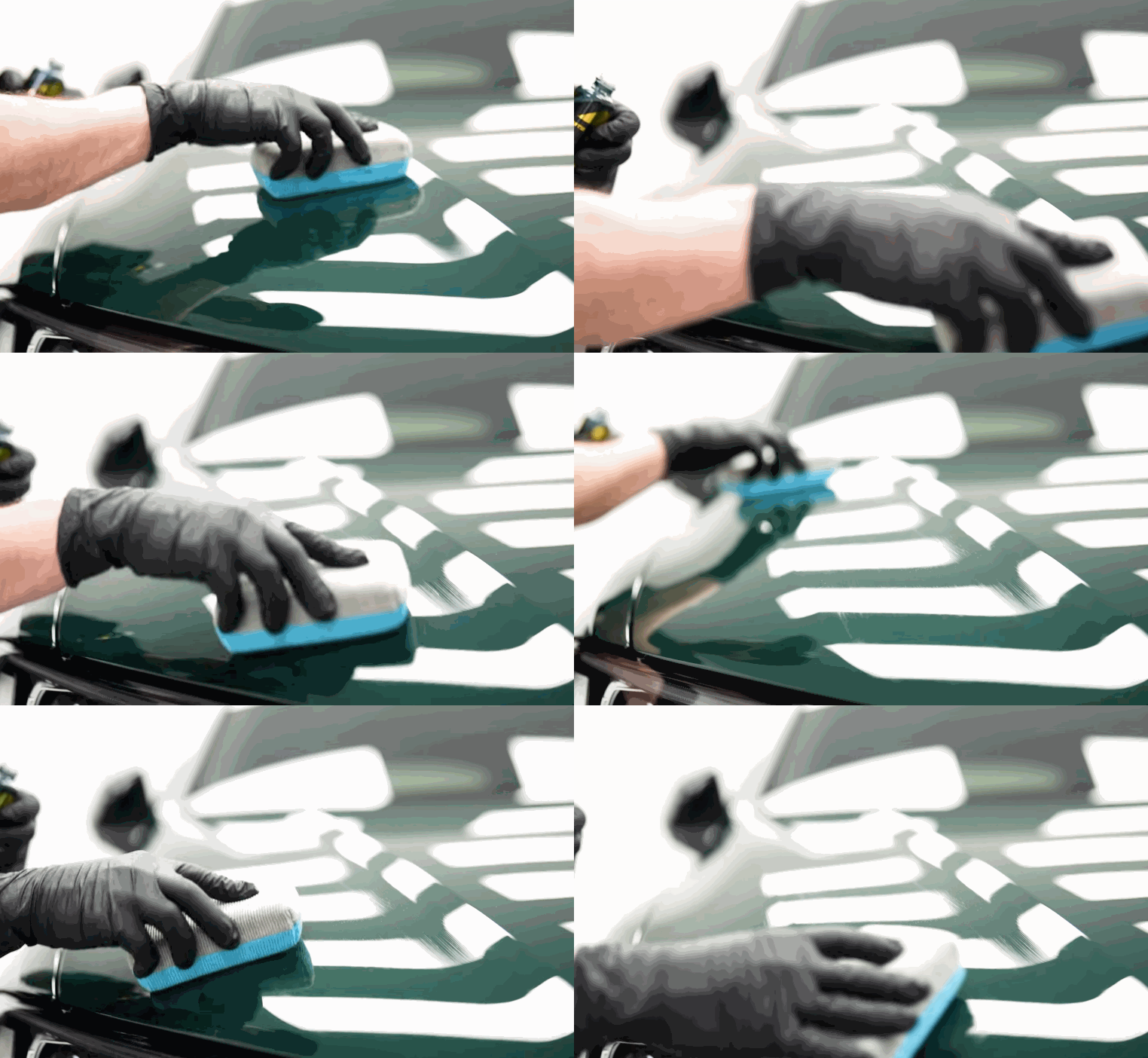
No. Rock chips require a thicker physical barrier than ceramic coating can provide. Gravel and road debris traveling at speed can penetrate the coating and damage the paint underneath.
That limitation is especially relevant for vehicles frequently driven on Highway 99, Highway 41, Highway 180, or other Central Valley routes where the front bumper, hood, and mirrors face repeated debris exposure.
This is where ceramic coating and PPF serve different purposes. The coating helps with gloss, water behavior, contamination, and maintenance, while paint protection film is designed to absorb more significant physical impacts.
For owners concerned about both problems, the two products can complement each other rather than compete.
How Can You Reduce Scratches on a Ceramic-Coated Car?
The best way to reduce scratches is to combine the coating’s slick surface with careful maintenance. A coated vehicle that is washed correctly can stay cleaner and accumulate fewer wash-induced marks than one that is repeatedly cleaned with aggressive methods.
A few habits make the biggest difference. Select each habit below as you build your ceramic coating maintenance routine.
Build Your Scratch Prevention Routine
Tap each maintenance habit to add it to your routine. Your progress indicator updates automatically.
Why These Habits Matter
Those steps allow the ceramic coating to do what it does best: reduce surface friction, make contamination easier to remove, and help the finish stay glossy without requiring excessive scrubbing.
Completing the checklist reflects the habits selected, not a measured level of scratch resistance. Ceramic coating does not make automotive paint scratch-proof.
What Should You Do If a Ceramic-Coated Car Gets Scratched?
A scratch on coated paint does not automatically mean the entire ceramic protection has failed. The right repair depends on whether the mark affects only the coating, the clear coat, or penetrates more deeply into the paint.
Very light marring may sometimes be improved through careful polishing, while deeper defects may need more involved correction. If polishing removes or weakens the coating in that area, the affected section can usually be recoated afterward.
At Auto Envy Fresno, we prefer to inspect the defect before recommending a solution. There is no reason to strip and recoat an entire vehicle when the issue is limited to one small panel.
That makes localized correction a practical option when isolated scratches appear over time.
Does Paint Correction Still Matter After Ceramic Coating?
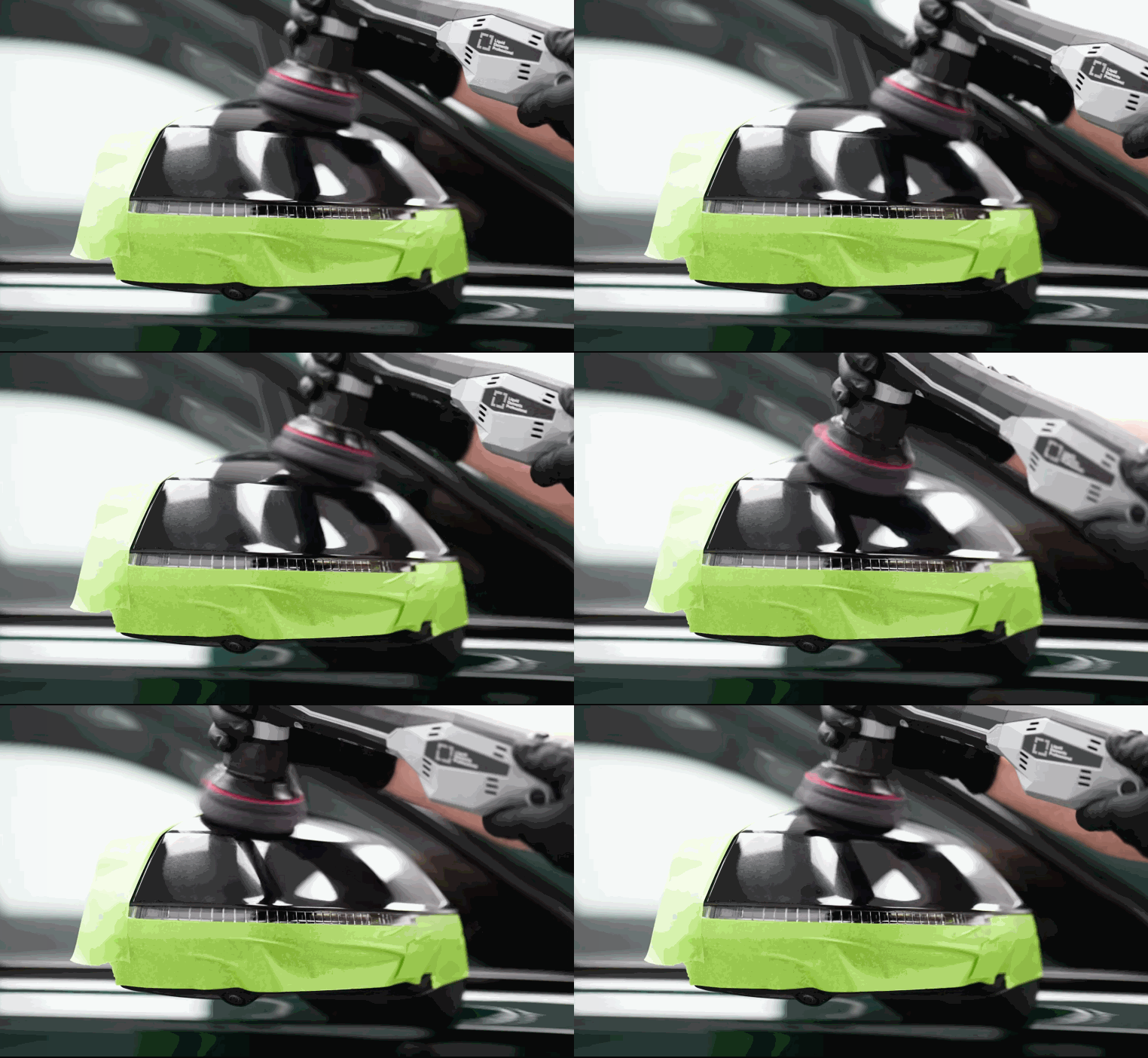
Yes. Paint correction can still be useful later if swirls, scratches, or haze develop after the coating has been in service for some time. Correction restores the surface, while recoating restores the protective layer that may have been reduced during polishing.
The process should be approached carefully because polishing is abrasive by design. It removes a small amount of material to level defects, which means the coating in that area may also be removed.
This is another reason proper maintenance matters. The fewer defects that develop, the less correction the vehicle will need later.
For Fresno drivers who want to keep a vehicle looking refined for years, periodic inspection can help catch small issues before they become more widespread.
Why Is Ceramic Coating Still Worth It If Scratches Can Happen?
The value of ceramic protection comes from everything it improves even though it cannot eliminate physical damage. A quality coating can still make the vehicle easier to wash, improve gloss, enhance water behavior, and reduce how strongly environmental contamination bonds to the surface.
Those benefits matter every week, not just when the car is first coated.
Dust, pollen, bug residue, road film, and hard-water deposits are all easier to manage when the surface stays slick and hydrophobic. That can reduce the amount of rubbing and scrubbing needed during routine cleaning.
In practical terms, the coating helps create conditions that are friendlier to the paint. It does not guarantee a scratch-free car, but it can make maintaining a clean, glossy finish much easier.
When Should You Add PPF to a Ceramic-Coated Vehicle?
PPF is worth considering when rock chips, scratches, and physical impact are bigger concerns than surface contamination alone. Adding film to high-impact areas gives the vehicle a thicker protective barrier where ceramic coating cannot provide enough physical protection.
Common areas include the front bumper, hood, fenders, mirrors, and rocker panels.
For a Fresno commuter with regular highway mileage, those surfaces face a different kind of abuse than the roof or trunk. PPF can handle the physical impacts while ceramic protection continues helping with maintenance and surface behavior.
At
Auto Envy Fresno, we often look at PPF and ceramic coating as complementary tools. One handles impact better; the other makes the exterior easier to care for.
Should You Still Get Ceramic Coating If You Want Scratch Protection?
Yes, ceramic coating can still be a smart choice as long as you understand that its strengths are surface protection, easier maintenance, gloss, and contamination resistance rather than heavy scratch or impact protection.
For drivers who want stronger defense against physical damage, adding PPF to vulnerable panels creates a more complete protection strategy.
Choose Ceramic Coating
A practical option when your priorities include easier washing, hydrophobic performance, enhanced gloss, and resistance to everyday environmental contamination.
Ideal for Easier MaintenanceConsider Ceramic Coating + PPF
Combining ceramic coating with paint protection film on vulnerable panels can provide more complete protection when rock chips and physical abrasions are major concerns.
Additional Impact ProtectionFind the Right Protection for Your Vehicle
We can look at how you drive, where the vehicle is exposed, and which protection setup makes the most sense for your Fresno routine.
Get Help Choosing Ceramic Coating or PPF