Paint correction before ceramic coating matters because the coating will preserve the condition of the surface underneath rather than hide scratches, swirls, oxidation, or etched water spots. Proper preparation gives the coating a cleaner surface to bond to and creates a noticeably better final finish.
For Fresno vehicles, surface prep can be especially important after years of sun exposure, hard-water spotting, dusty conditions, automatic car washes, and regular road use. The goal is not to polish every vehicle aggressively. It is to correct what actually needs attention before the protective layer goes on.
What Does Paint Correction Do Before Ceramic Coating?
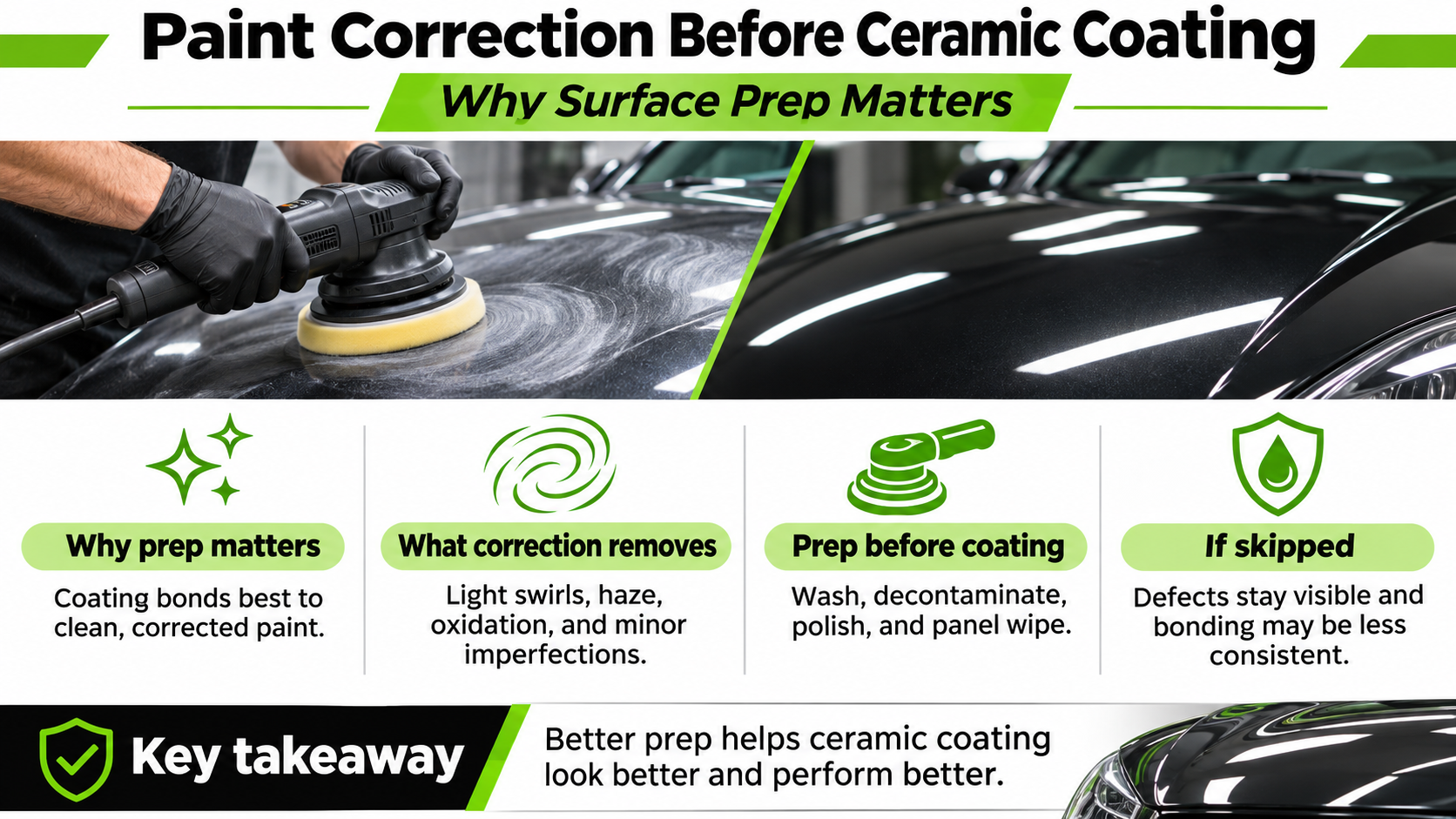
Paint correction removes or reduces defects in the clear coat so the finish looks cleaner before protection is applied. Depending on the vehicle, that can mean improving swirl marks, light scratches, haze, oxidation, or other imperfections that affect gloss and clarity.
The process uses machine polishing and carefully selected abrasives to refine the paint surface. It does not simply cover defects with fillers or temporary gloss enhancers.
At Auto Envy Fresno, we treat correction as a preparation step rather than a package that every vehicle automatically needs. A nearly new car with clean paint may require only light polishing, while a darker vehicle that has spent years going through automatic washes may need considerably more refinement.
The finished coating can only look as good as the surface underneath it.
Why Is Decontamination Important Before Paint Correction?
Even paint that looks clean can have bonded contamination that should be removed before polishing begins. Surface decontamination helps prevent embedded dirt, mineral residue, industrial fallout, and other particles from interfering with correction and coating adhesion.
Fresno conditions can contribute several types of contamination:
- Road film and traffic residue
- Hard-water deposits
- Dust and agricultural particles
- Bug residue
- Tree sap and organic contamination
- Embedded metallic fallout
Clean the Paint Before You Polish
Work through the preparation stages to see how different categories of contamination may be addressed.
Illustrative contamination patterns. Actual removal depends on the material, paint condition, and treatment used.
Surface Inspection Needed
The illustrated hood contains several types of contamination. Polishing before suitable cleaning and decontamination may drag particles across the finish.
Begin with a safe, thorough wash. Evaluate what remains before choosing additional treatments.
If those materials remain on the paint, polishing can drag contamination across the surface and make the correction process less consistent.
Preparation comes before correction. A proper prep process normally begins with thorough washing and chemical decontamination, followed by mechanical decontamination when appropriate. Only after the surface is truly clean does it make sense to evaluate which defects still need correction.
Does Every Vehicle Need Paint Correction Before Coating?
No. Not every vehicle needs a full paint correction before ceramic coating. The amount of polishing should depend on the current condition of the paint and the owner's expectations for the finished result.
A new vehicle may still have minor defects from transport, dealership washing, or previous handling, but that does not necessarily justify an aggressive multi-step correction. In many cases, light polishing may be enough to improve clarity and remove small imperfections.
Older paint may require more work if there are visible swirls, oxidation, or wash-induced marks.
That is why inspection matters. At
Auto Envy Fresno, we prefer to evaluate the paint under proper lighting before deciding how much correction makes sense. The objective is to improve the finish without removing more clear coat than necessary.
Why Is Decontamination Important Before Paint Correction?
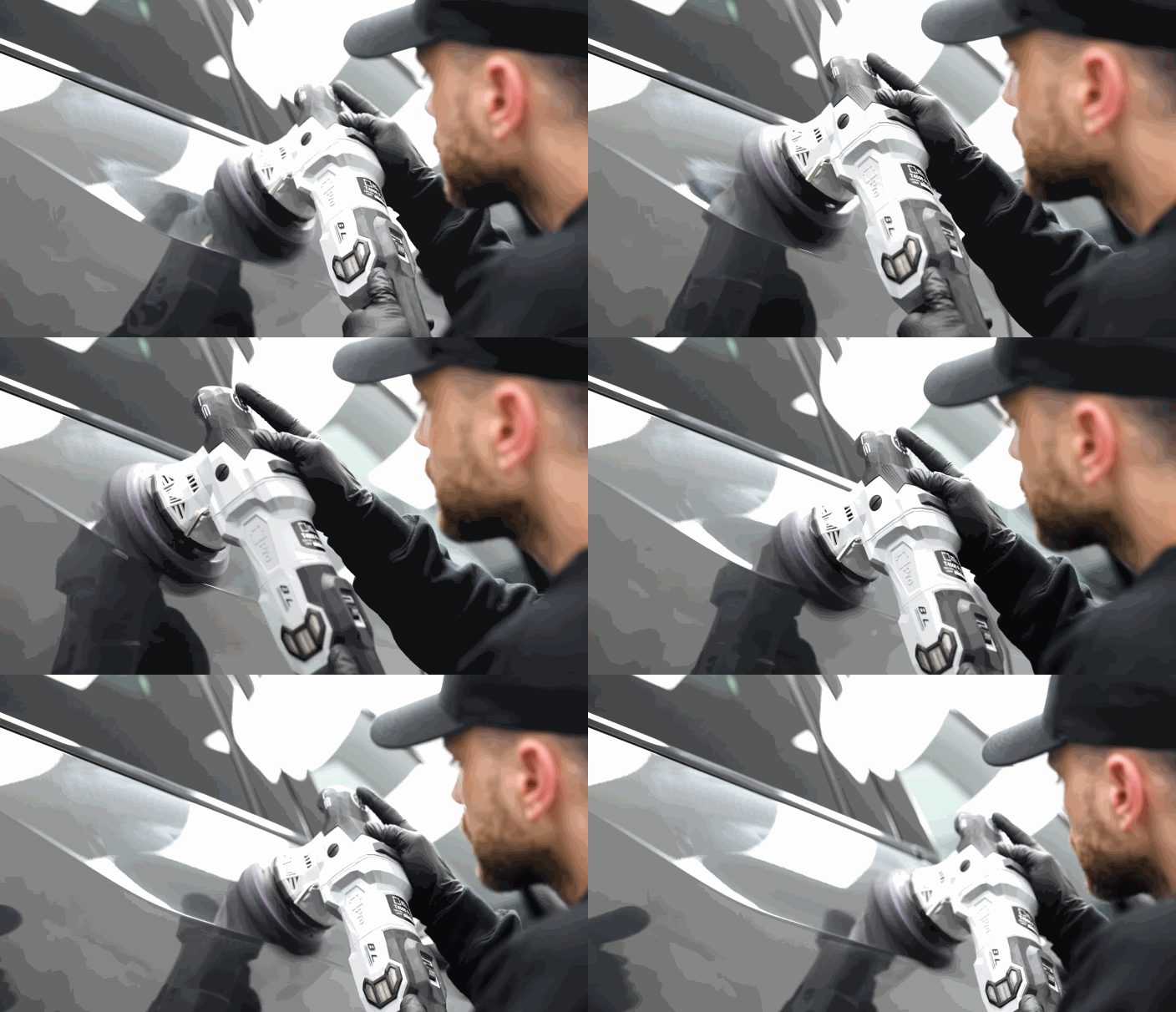
Swirl marks, light scratches, haze, oxidation, and certain water-spot defects can often be improved through paint correction. The exact result depends on how deep the damage extends into the clear coat.
Light wash marks are generally easier to address because they affect the upper surface. Deeper scratches may only be reduced rather than completely removed if eliminating them would require removing too much clear coat.
Water spotting is another common Fresno concern. Mineral deposits that sit on hot paint can eventually etch into the surface, and polishing may be necessary when chemical removal is no longer enough.
At
Auto Envy Fresno, we would rather leave a deep defect slightly visible than chase perfection at the expense of unnecessary clear-coat removal. Good correction is about improving the paint safely, not removing every mark at any cost.
Why Does Surface Prep Affect Ceramic Coating Bonding?
A coating needs direct contact with clean paint to bond consistently. Wax residue, polishing oils, silicone, contamination, or poorly prepared areas can interfere with how evenly the ceramic product adheres to the surface.
That is why the final preparation step after polishing matters just as much as the polishing itself.
What's Under the Ceramic Coating?
Switch between a paint surface with leftover residue and one that has been properly prepared before coating.
Residue Can Interfere With Coating Contact
Polishing oils, waxes, silicone, and remaining contamination may prevent consistent contact between the coating and the prepared paint surface. Additional cleaning and inspection are needed before application.
Simplified illustration only. Coating adhesion and durability depend on product chemistry, surface condition, preparation, application, and curing.
Once correction is complete, the paint should be carefully cleaned to remove remaining oils and residues. The surface should then be inspected before the ceramic coating application begins.
A properly prepared surface creates better conditions for coating adhesion. This extra preparation may not be dramatic to watch, but it plays a major role in how professional coating work performs after the vehicle leaves the shop. Good surface prep gives the coating the conditions it needs to bond properly instead of asking the product to compensate for shortcuts underneath it.
Can Ceramic Coating Hide Swirl Marks or Scratches?
A coating can make paint look glossier, but it does not truly remove swirl marks, scratches, or oxidation. Defects that are visible before application can remain visible afterward because ceramic coating is transparent.
That is why using a coating as a cosmetic shortcut usually creates disappointing results. Increased gloss may make the paint look richer overall, but it can also make certain defects easier to notice under direct sunlight or shop lighting.
For Fresno owners with darker paint colors, this can be especially obvious because black, dark blue, and other deep finishes tend to show wash marks and light scratches more clearly.
The better approach is to correct the defects that matter before protection is added, rather than expecting the coating to disguise them.
How Much Paint Correction Is Enough?
The right amount of correction depends on the paint, the depth of the defects, and how close to perfect the owner wants the finish to look. More polishing is not automatically better because every correction step removes a small amount of clear coat.
Some vehicles only need a light one-step polish to improve gloss and reduce minor swirls. Others may benefit from a multi-stage process when the paint has heavier defects.
A practical way to think about it is:
- Light polishing: Best for minor haze and light wash marks.
- One-step correction: Suitable when moderate swirl reduction and gloss improvement are the main goals.
- Multi-step correction: Reserved for more significant defects and owners seeking a higher level of refinement.
At
Auto Envy Fresno, we focus on safe improvement rather than chasing a theoretical 100-percent defect-free finish. Preserving paint thickness matters just as much as improving appearance.
Does New Paint Need Surface Preparation Too?
Even brand-new vehicles can benefit from preparation before coating. New does not always mean defect-free, especially after factory transport, dealership handling, washing, and outdoor storage.
Minor swirls, adhesive residue, rail dust, hard-water spots, or other contamination can already be present before the owner takes delivery.
That does not mean every new vehicle needs aggressive paint correction. In many cases, proper decontamination and a light polish are enough to create a clean foundation for ceramic protection.
This is one reason inspecting the actual paint matters more than relying on the age of the vehicle.
Why Does Professional Paint Correction Matter?
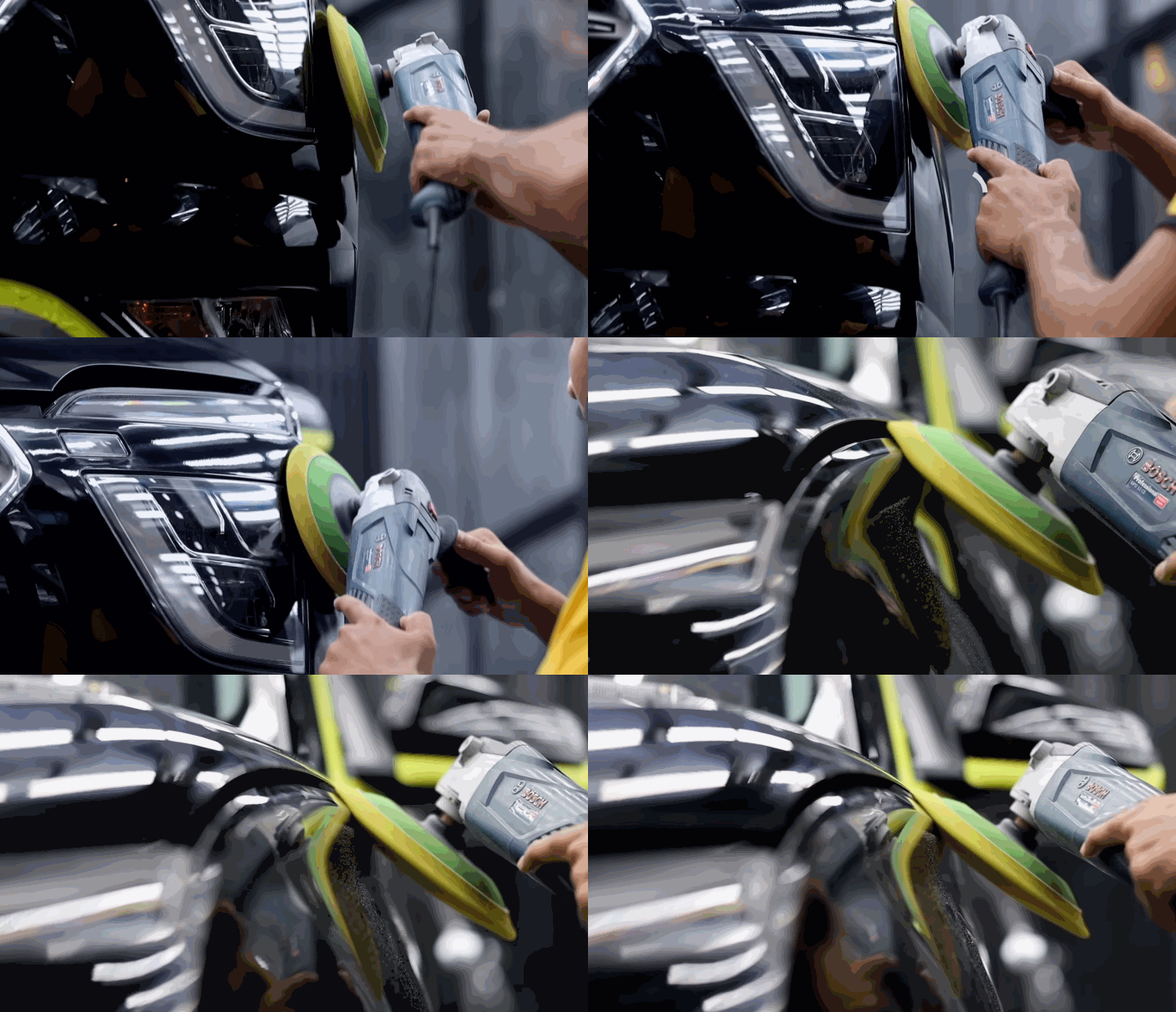
Professional correction matters because polishing paint safely requires judgment, not just aggressive machine work. The goal is to improve defects while preserving as much healthy clear coat as possible.
Different paints respond differently to compounds, pads, machine speed, and pressure. Some finishes are softer and mark easily, while others require more effort to correct.
Lighting, inspection, and test spots are also part of the process. A skilled technician should determine how the paint reacts before committing to a full correction approach.
At
Auto Envy Fresno, we treat this step as part of the overall ceramic coating result. Good preparation makes the coating look better, bond more consistently, and perform on a surface that has already been properly refined.
Should You Correct the Paint Before Booking Ceramic Coating?
Paint correction is worth doing before ceramic coating when visible defects would bother you after the protection is installed. The level of correction should match the condition of the vehicle rather than following a one-size-fits-all package.
For some Fresno vehicles, that may mean only a light polish. For others, more extensive correction can make a significant difference in gloss, clarity, and overall finish.
Removes appropriate surface contaminants before coating preparation.
May improve gloss and reduce minor visible imperfections when appropriate.
May be considered for more noticeable defects after assessing paint condition.
What matters most is creating the right surface before the coating is applied. Proper assessment helps determine whether additional polishing or correction is appropriate.
Get Your Paint Evaluated Before Ceramic Coating
Planning a ceramic coating service? Contact Auto Envy Fresno to have the paint evaluated first. We can determine whether your vehicle needs decontamination, light polishing, or more involved correction before the coating goes on.