High-quality paint protection film can often last around 5 to 10 years when professionally installed and properly maintained, although actual PPF lifespan depends on the film, sun exposure, mileage, parking conditions, and care. In Fresno, strong Central Valley sun and frequent highway driving make those factors particularly important when estimating how long the film will continue looking and performing its best.
PPF is designed to be a sacrificial protective layer. It takes on rock impacts, minor scratches, insects, contamination, and environmental exposure so the paint underneath does not have to.
How Long Does Paint Protection Film Usually Last?
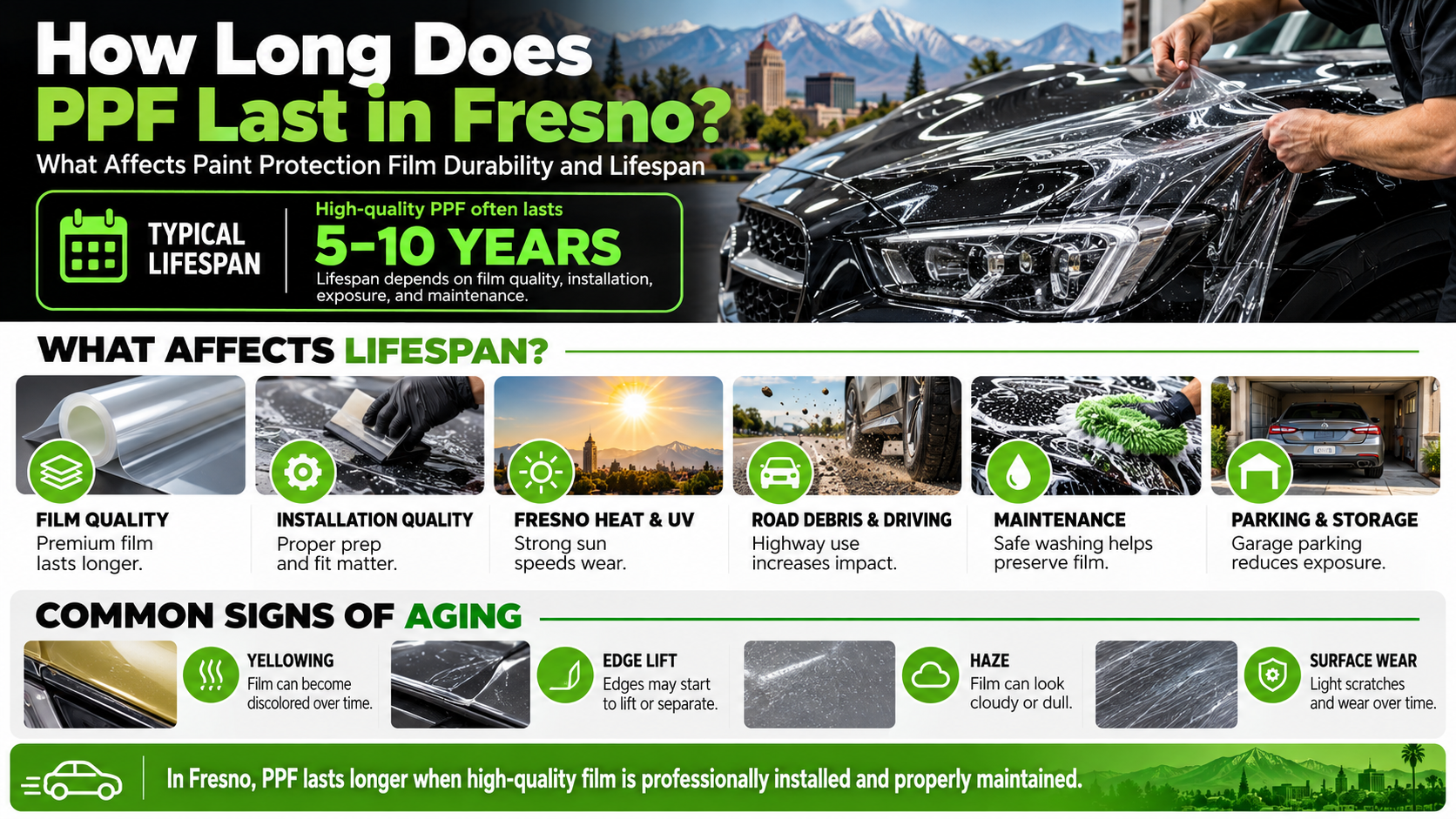
Most quality paint protection film is designed to provide several years of service, with premium products commonly falling within an approximate 5-to-10-year lifespan under normal conditions. Some manufacturers support premium PPF with warranties extending to 10 years, but a warranty period should not be treated as a guarantee that every installation will age identically.
The actual lifespan depends on what the film experiences after installation.
A vehicle driven only a few thousand miles each year and stored indoors may put relatively little stress on its paint protection film. A Fresno daily driver parked outside and traveling Highway 99 five days a week experiences much more sun, contamination, and road impact.
At Auto Envy Fresno, we therefore look at PPF lifespan as a range rather than a fixed expiration date. Film age matters, but condition matters more.
Well-maintained film may continue looking clean and providing protection for years, while neglected or heavily exposed PPF can show wear sooner.
Does Fresno Heat and Sun Affect PPF Lifespan?
Fresno's strong sun and high summer temperatures can influence how paint protection film ages, particularly when a vehicle spends long periods parked outdoors. Modern premium PPF is engineered to tolerate automotive heat and UV exposure, but environmental conditions still affect long-term wear.
Sunlight can repeatedly heat the hood, roof, fenders, and other exposed panels throughout the day. Parking outdoors also exposes the film to dust, pollen, bird droppings, insects, hard-water deposits, and other contamination.
The important point is that Fresno heat does not mean quality PPF will suddenly fail after a few summers. Film quality, installation, and maintenance all work together to determine PPF durability.
Promptly removing contaminants is especially important. Bird residue and insect remains should not be allowed to bake onto the surface for extended periods during hot weather.
At
Auto Envy, we recommend treating the film like a protective surface that still needs regular care. PPF reduces damage to the paint, but it should not be ignored simply because it is designed to take abuse.
How Do Fresno Driving Conditions Affect PPF Durability?
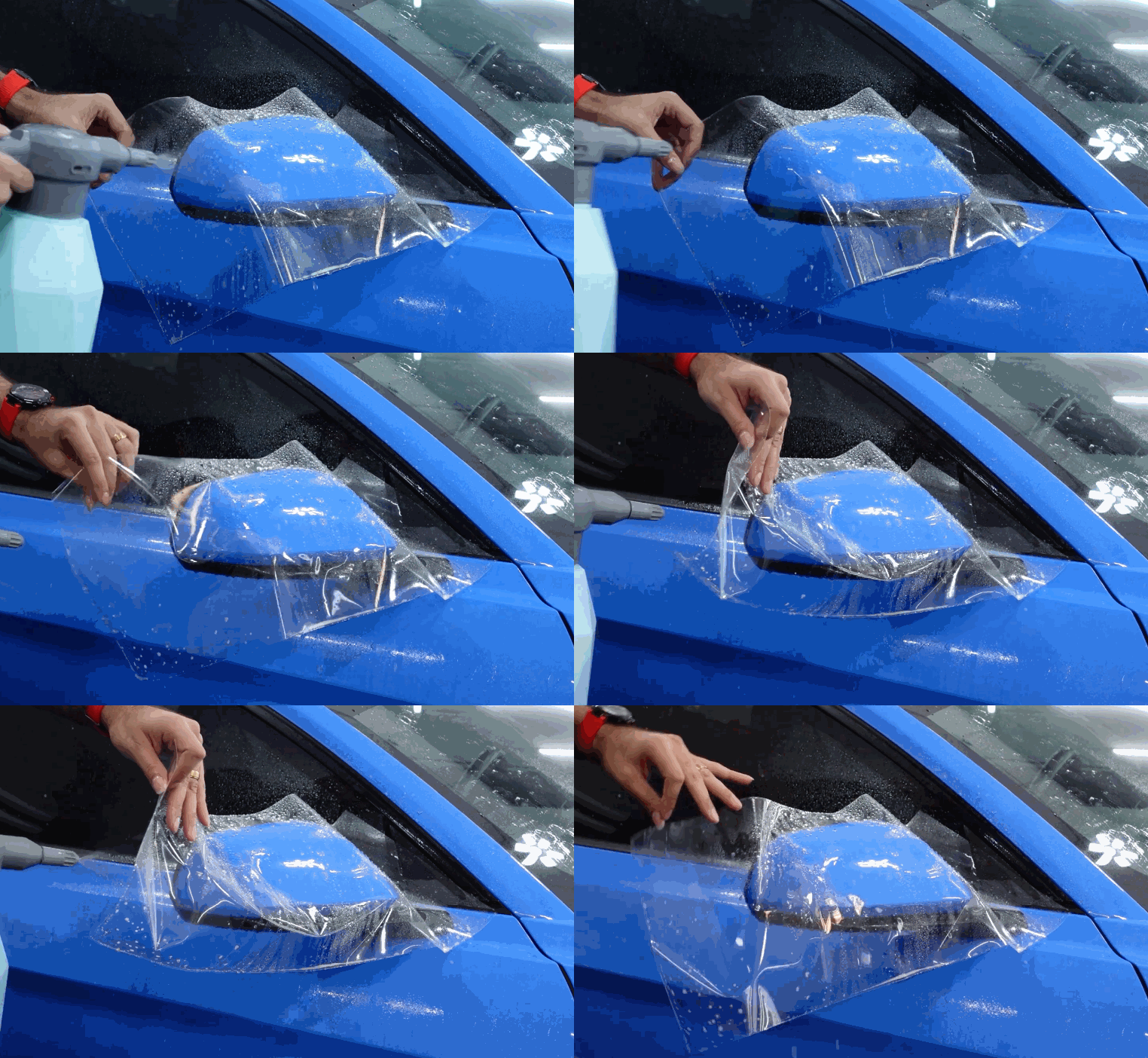
Frequent driving can increase visible wear on PPF because the film receives more rock impacts, insects, road debris, and contamination with every mile. This is exactly what the film is installed to handle, but higher exposure can influence how quickly signs of use accumulate.
Regular travel on Highway 99, Highway 41, and Highway 180 puts the front bumper, hood, fenders, and mirrors directly in the path of debris thrown by surrounding vehicles.
Agricultural roads and construction activity around the Central Valley can introduce additional dust, gravel, and loose material. Drivers who regularly travel outside Fresno may accumulate substantially more exposure than someone using the vehicle primarily for short local trips.
This does not necessarily mean the PPF needs replacement as soon as it shows a few marks. Light surface scratches on some modern films can self-heal with heat, while small impact marks may simply indicate that the film has absorbed damage that could otherwise have reached the paint.
Does Parking Indoors Help Paint Protection Film Last Longer?
Garage or covered parking can help reduce environmental exposure and may contribute to longer-lasting PPF by limiting constant UV, heat, water spotting, and contamination. Outdoor parking does not make PPF impractical, but it places greater importance on proper maintenance.
A garage-kept vehicle may spend most of its non-driving hours protected from direct sunlight. A vehicle parked outside at home and work can receive many additional hours of UV and heat exposure each week.
Shade can help, but parking beneath trees introduces other contaminants such as sap, pollen, insects, and bird droppings. Those substances should be removed rather than left sitting on the film.
The better question is not whether your car lives indoors or outdoors. It is whether the maintenance routine matches the amount of exposure the
PPF receives.
Does PPF Quality Affect How Long the Film Lasts?
Film quality has a major effect on PPF lifespan because premium products are engineered for stronger resistance to yellowing, cracking, staining, delamination, and everyday surface wear. Adhesive technology and top-coat quality also influence how the film ages.
Modern premium PPF may include self-healing surface technology and stain-resistant top coats designed to maintain clarity through years of use.
However, even a high-quality product cannot completely overcome poor installation or neglect. The film, installer, vehicle condition, and maintenance routine all contribute to the final result.
That is why durability should be evaluated as more than a number of years on a warranty. What matters is how well the
paint protection film continues protecting the vehicle while maintaining acceptable clarity, adhesion, and appearance.
Does PPF Maintenance Affect How Long It Lasts?
Regular maintenance can help PPF last longer by preventing dirt, chemicals, mineral deposits, and organic contaminants from remaining on the film for extended periods. Paint protection film does not require complicated care, but neglect can shorten the period in which it looks and performs its best.
Routine hand washing with appropriate automotive products is usually the foundation of good PPF maintenance. In Fresno, frequent dust and dry conditions can leave a noticeable layer of contamination on horizontal panels, while summer heat can make insects, bird droppings, or water spots more difficult to remove when they are left untreated.
Aggressive scrubbing should be avoided, especially around film edges. High-pressure water should also be used carefully near seams or exposed edges to reduce unnecessary stress on the installation.
The goal is not to constantly polish or treat the film. Consistent, gentle cleaning is generally more useful than allowing contamination to accumulate and then trying to remove it aggressively.
How Much Does Professional PPF Installation Affect Durability?
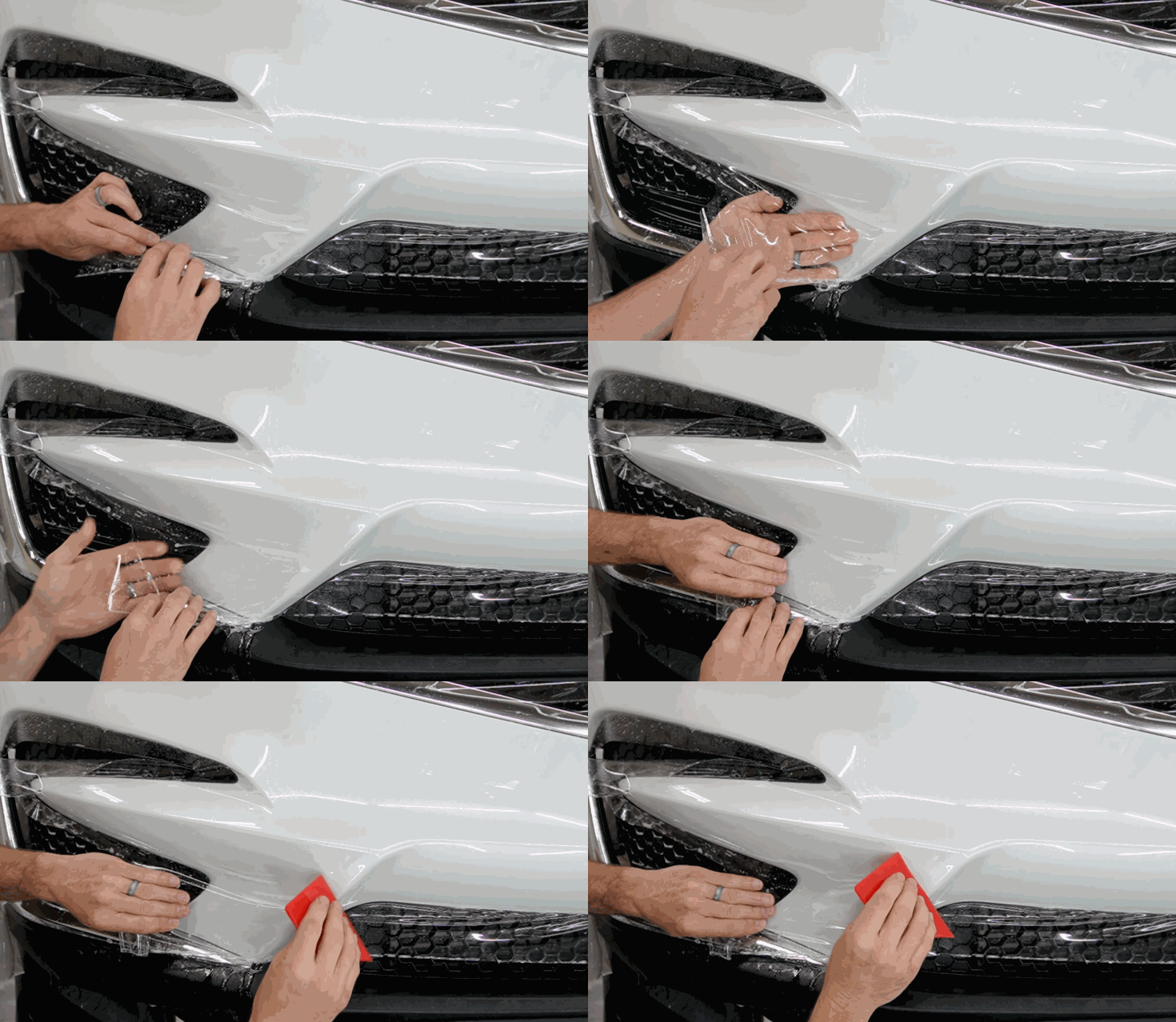
Professional installation has a major influence on PPF durability because proper surface preparation, positioning, edge finishing, and adhesion help the film remain secure over time. Even high-quality film can develop problems earlier when it is installed over contamination or poorly finished around complex areas.
Before installation, the paint should be cleaned and evaluated carefully. Dirt, wax residue, oils, and other contaminants can interfere with adhesion if they remain beneath the material.
Complex areas such as bumpers, mirrors, vents, curves, and tight edges require additional attention because the film must conform correctly without excessive tension.
At
Auto Envy, we consider installation quality part of the film's expected lifespan. PPF should begin its service life properly bonded, accurately positioned, and finished in a way that allows it to handle normal Fresno driving without unnecessary stress around the edges.
How Long Should You Expect PPF to Last in Fresno?
Fresno vehicle owners can often expect quality paint protection film to provide roughly 5 to 10 years of useful service, but the real lifespan depends on film quality, installation, mileage, parking, maintenance, and environmental exposure. Vehicles that receive heavy highway use and spend most of their time outdoors may age differently from garage-kept cars driven occasionally.
The most useful measure is how the film is performing. Good PPF should remain securely adhered, reasonably clear, and capable of acting as a sacrificial barrier between Fresno road conditions and the paint beneath it.
That is also why choosing PPF should involve thinking beyond the initial installation. The product, installer, and way the vehicle will be maintained all contribute to how much value you receive over the years.
When your existing film starts showing its age, or you want to protect a vehicle before Fresno roads leave their mark, contact us at Auto Envy Fresno. We can inspect your current PPF, discuss replacement when needed, or help you choose a new paint protection setup based on your vehicle and driving habits.